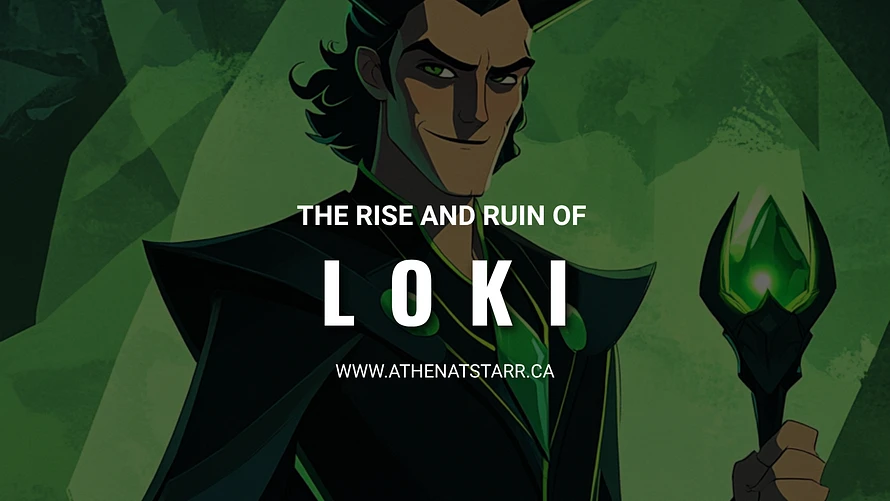
Hands down, this man is one of my favorite villains. But his journey from menacing god to beloved antihero perfectly captures what we lose when we fall in love with our monsters.
When Tom Hiddleston first brought the God of Mischief to life in 2011’s Thor, he was a creature of calculated malice. Every gesture of brotherhood concealed a knife; every silver-tongued promise foreshadowed disaster. His elegant exterior masked a rage so deep it nearly consumed his own people. This wasn’t sibling rivalry. This was a villain willing to burn the world down.
Loki reached his most terrifying form in The Avengers. His entrance through the portal wasn’t just dramatic—it was apocalyptic. That infamous “kneel before me” speech in Stuttgart wasn’t theater—it was a declaration of war. Loki didn’t just wield power. He wielded unpredictability. And having lost everything, he had nothing left to lose. His wit sharpened his menace rather than softening it.
Then something shifted.
Thor: The Dark World began the unraveling. We saw more of his grief. His bond with Frigga. His pain. The film tried to balance threat with sympathy—but the more we understood Loki, the harder it became to fear him.
By Thor: Ragnarok, the metamorphosis was complete. Taika Waititi brought style, humor, and color—but dulled Loki’s edge. His chaos became charming. His betrayals became punchlines. He wasn’t dangerous anymore—he was fun. Entertaining. Predictable.
The Disney+ series finished the transformation. The god who once brought New York to its knees became a cosmic errand boy, solving bureaucratic puzzles in the multiverse. His grandeur dissolved into existential therapy and time-clock banter. We gained character development—but lost what made him terrifying.
This wasn’t random. Hiddleston’s charisma made audiences hungry for more. Marvel saw a cash cow. And modern storytelling loves a redemption arc. But every step toward likability was a step away from menace.
So here’s the question:
Can a villain remain effective once we start to love them?
Loki’s story suggests not.
The very things that made us adore him—his pain, his wit, his charm—also unraveled him. The god who once declared himself “burdened with glorious purpose” became burdened with relatability. He didn’t scare us anymore.
And maybe that’s the real trick.
The greatest betrayal isn’t what the villain does to the hero.
It’s what the audience does to the villain when they love him too much.
We stripped him of danger. We robbed him of fear.
We turned a monster into a mascot.
XOXO
Athena Starr